


If you’ve ever wondered what the Scoville scale actually means, you’re not alone. From jalapeños to Carolina Reapers, the Scoville scale is the standard way to measure how spicy a pepper or hot sauce is — but the system is often misunderstood.
In this guide, we’ll fully explain the Scoville scale, how it works, how accurate it is, and how to use it to choose the right hot sauce for your heat tolerance.
What Is the Scoville Scale?
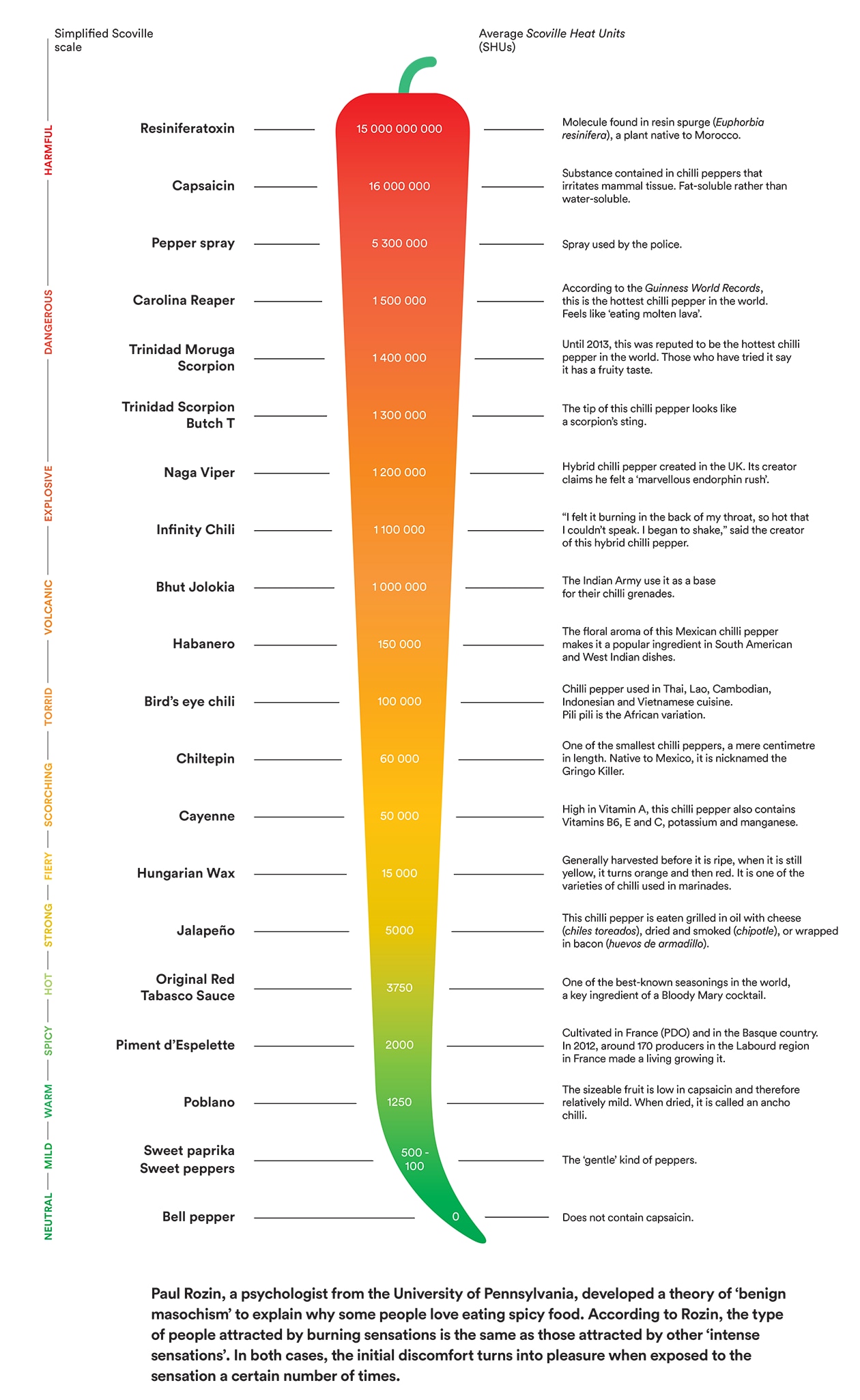
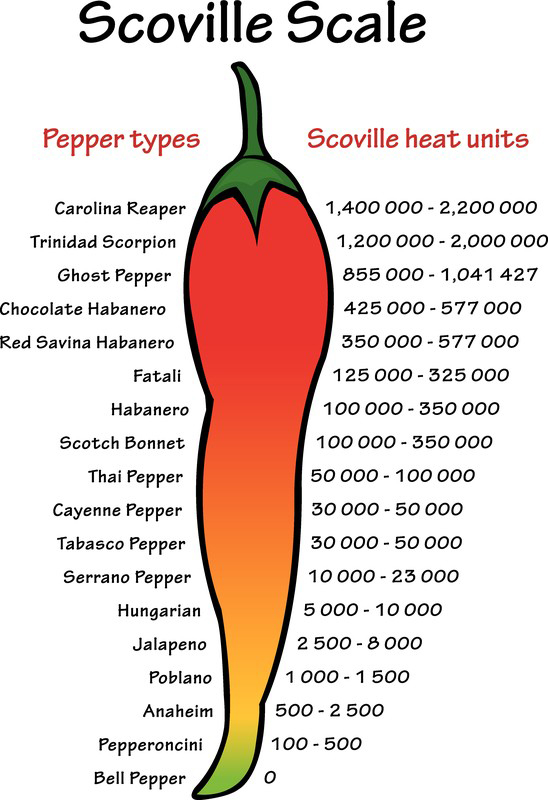

The Scoville scale measures the spiciness (heat) of chili peppers and hot sauces by determining how much capsaicinthey contain. Capsaicin is the natural compound responsible for the burning sensation you feel when eating spicy foods.
The scale is expressed in Scoville Heat Units (SHU) — the higher the number, the hotter the pepper or sauce.
Who Invented the Scoville Scale?
The Scoville scale was created in 1912 by Wilbur Scoville, an American pharmacist. His original test, known as the Scoville Organoleptic Test, involved diluting chili extracts in sugar water until a panel of tasters could no longer detect heat.
The number of dilutions required became the pepper’s Scoville rating.
🌶️ Example:
If a pepper needed to be diluted 100,000 times before heat was no longer detected, it measured 100,000 SHU.
How the Scoville Scale Works Today
While the original taste-test method was subjective, modern Scoville ratings use High-Performance Liquid Chromatography (HPLC). This scientific method measures capsaicin content precisely and converts it into SHU.
Modern Scoville Testing:
-
Measures capsaicinoids chemically
-
Eliminates human taste bias
-
Produces consistent results
-
Still expressed in SHU for familiarity
This makes today’s Scoville ratings far more accurate than the original test.
Scoville Scale Chart (Common Peppers)
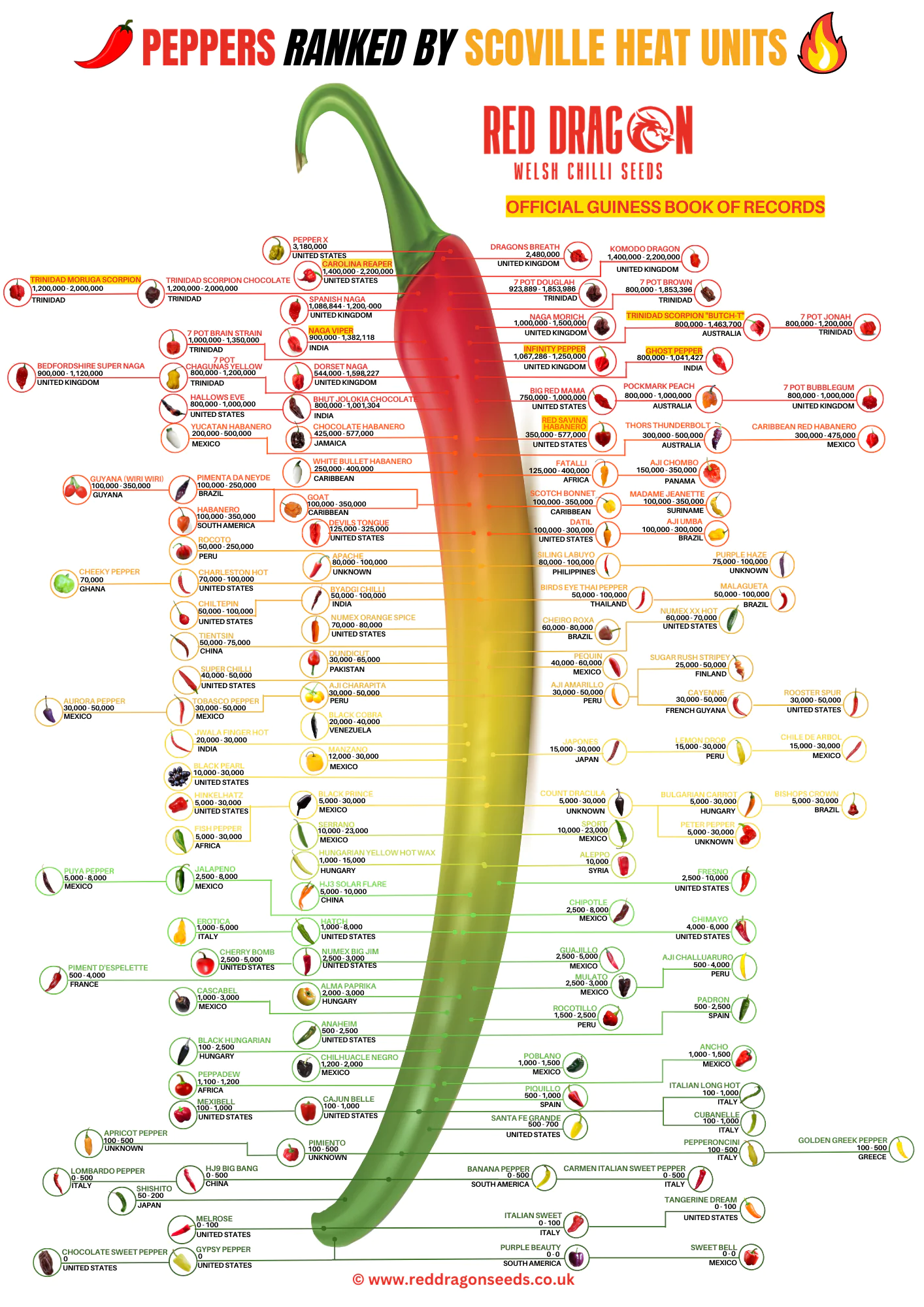

Here’s how popular peppers compare:
-
Bell Pepper: 0 SHU
-
Jalapeño: 2,500 – 8,000 SHU
-
Serrano: 10,000 – 23,000 SHU
-
Cayenne: 30,000 – 50,000 SHU
-
Habanero: 100,000 – 350,000 SHU
-
Ghost Pepper: ~1,000,000 SHU
-
Carolina Reaper: 1,600,000 – 2,200,000+ SHU
How Hot Sauce Uses the Scoville Scale
Hot sauces often list a Scoville rating, but interpreting it requires context.
Why Sauce SHU Varies:
-
Peppers are diluted with vinegar, fruit, or fermentation
-
Recipes differ between brands
-
Extract-based sauces can spike SHU artificially
🔥 Important: A sauce made with Carolina Reaper peppers may not be as hot as the pepper itself — but it can still be extremely spicy.
Does Higher Scoville Mean Better Hot Sauce?
Not necessarily.
While high SHU numbers appeal to heat seekers, flavor balance matters more. Many craft hot sauces aim for:
-
Pepper-forward flavor
-
Clean, natural heat
-
No capsaicin extract
-
Enjoyable burn
Some lower-SHU sauces taste hotter due to acidity or pepper type.
Scoville Scale vs Real-Life Heat
Two sauces with the same SHU can feel different because:
-
Vinegar increases perceived burn
-
Fat content reduces heat
-
Sugar softens spice
-
Pepper variety affects burn speed
🔥 Example:
Ghost pepper heat hits fast and fades quicker, while Carolina Reaper heat builds slowly and lingers.
How to Use the Scoville Scale to Choose Hot Sauce
If You’re New to Heat:
-
2,000 – 10,000 SHU
-
Jalapeño-based sauces
Medium Heat Lovers:
-
10,000 – 50,000 SHU
-
Serrano or cayenne sauces
Spice Enthusiasts:
-
50,000 – 300,000 SHU
-
Habanero sauces
Extreme Heat Fans:
-
500,000+ SHU
-
Ghost pepper and Carolina Reaper sauces
Frequently Asked Questions (FAQ)
Is the Scoville scale accurate?
Yes — modern testing uses lab-based methods for precision.
Can hot sauce be hotter than peppers?
Yes, especially if it uses capsaicin extract.
Why do some sauces feel hotter than their SHU rating?
Acidity, sugar, and pepper type affect perceived heat.
Is capsaicin dangerous?
In normal culinary amounts, it’s safe for most people.
Final Thoughts
The Scoville scale isn’t just a number — it’s a tool that helps you understand heat, compare peppers, and choose hot sauces that match your tolerance.
Whether you prefer mild jalapeño warmth or Carolina Reaper-level intensity, understanding the Scoville scale lets you enjoy spicy food confidently and responsibly 🌶️🔥
Is capsaicin dangerous?
In normal culinary amounts, it’s safe for most people.
Read More


