


The Scoville Scale is everywhere in hot sauce culture — but most explanations stop at numbers. That’s why so many people buy a sauce rated at 30,000 SHU and swear it feels hotter than a 100,000 SHU sauce.
This pillar guide fixes that.
You’ll learn:
-
What the Scoville Scale actually measures
-
Why hot sauces feel hotter (or milder) than their SHU
-
How acid, fat, sugar, fermentation, and texture change heat perception
-
Real pepper-to-sauce dilution examples
-
A practical Perceived Heat Chart
-
A step-by-step plan to build heat tolerance
-
How to use Scoville correctly when buying hot sauce
This is the Scoville Scale explained for real eating — not trivia.
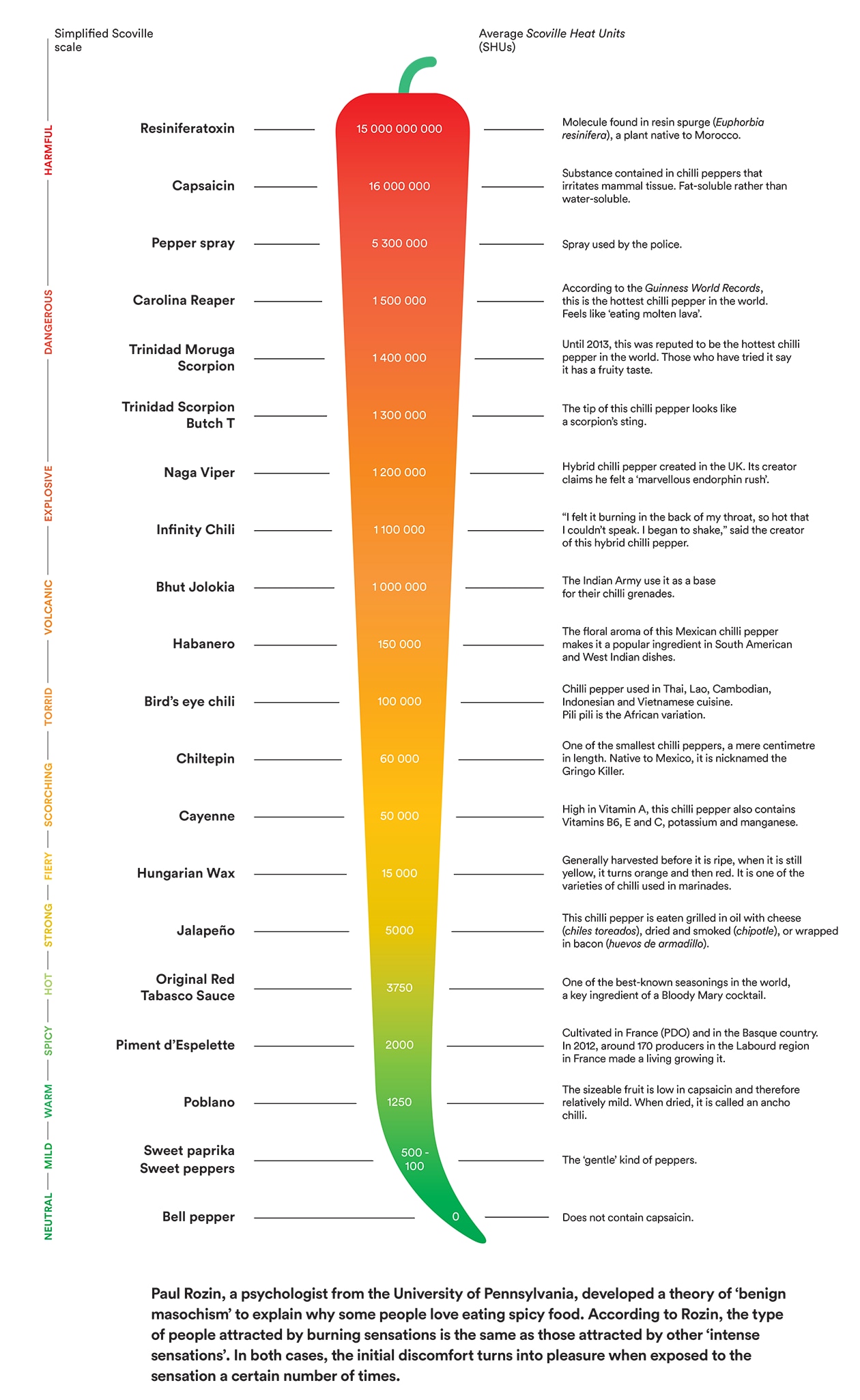
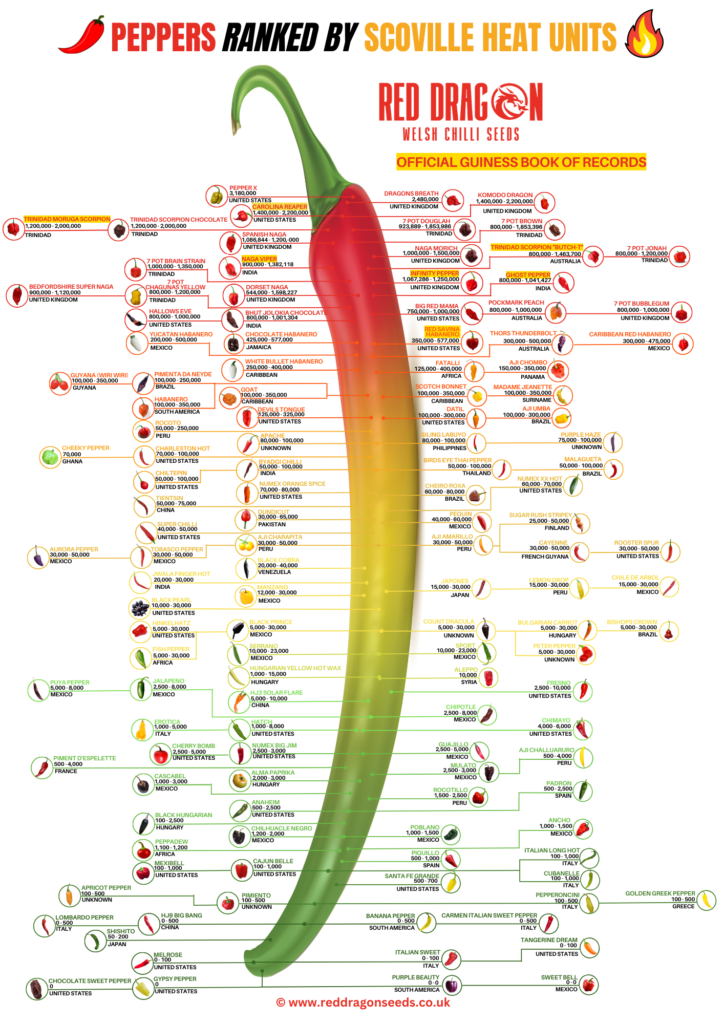

Table of Contents
-
What the Scoville Scale Measures (and What It Doesn’t)
-
Why Sauces Feel Hotter Than Their SHU
-
The 4 Ingredients That Change Perceived Heat
-
Perceived Heat Chart (The Missing Tool)
-
Pepper-to-Sauce Dilution Examples
-
Fermented vs Vinegar Sauces (Why Heat Feels Different)
-
Why Extract Sauces Feel “Wrong”
-
How to Use Scoville When Buying Hot Sauce
-
How to Build Heat Tolerance (Without Pain)
-
Common Scoville Myths (Debunked)
-
Scoville Cheat Sheet
-
Final Takeaways
1. What the Scoville Scale Measures (and What It Doesn’t)
The Scoville Scale measures the concentration of capsaicinoids (primarily capsaicin) in peppers and sauces, expressed as Scoville Heat Units (SHU).
Modern SHU values are determined using HPLC laboratory testing, not taste testers.
What SHU Tells You
-
Capsaicin concentration
-
Potential heat intensity
-
Relative pepper strength
What SHU Does NOT Tell You
-
How fast heat hits
-
How long it lasts
-
Whether it feels smooth or sharp
-
How ingredients alter the burn
🔥 SHU is chemical potential — not eating experience.
2. Why Hot Sauces Often Feel Hotter Than Their SHU
This is the biggest gap in most Scoville articles.
A pepper’s SHU is measured before dilution.
A sauce’s SHU is measured after blending.
Yet sauces often feel hotter because perceived heat ≠ measured heat.
Perceived heat is shaped by:
-
Acidity
-
Fat
-
Sugar
-
Texture
-
Fermentation
3. The 4 Ingredients That Control Perceived Heat
1️⃣ Acid (Vinegar & Citrus) — Heat Accelerator
-
Triggers pain receptors faster
-
Creates sharp, immediate burn
-
Makes sauces feel hotter than their SHU
🔥 Thin vinegar sauces punch above their weight.
2️⃣ Fat (Oil, Butter, Egg Yolk) — Heat Softener
-
Binds capsaicin
-
Slows receptor activation
-
Smooths the burn
🔥 Same SHU + more fat = less perceived heat.
3️⃣ Sugar (Fruit, Honey, Carrot) — Heat Buffer
-
Offsets pain signals
-
Slows heat buildup
-
Reduces afterburn
🔥 This is why mango habanero feels gentler than raw habanero.
4️⃣ Texture & Thickness — Heat Timing Control
-
Thin = fast burn
-
Thick = slow build
-
Chunky = uneven delivery
🔥 Texture changes when you feel heat.
4. Perceived Heat Chart (Use This Instead of SHU Alone)
| Sauce Style | Measured SHU | Feels Like |
|---|---|---|
| Thin vinegar sauce | 5,000 | 10k–15k |
| Fermented hot sauce | 10,000 | 8k–9k |
| Chili oil | 20,000 | 12k–15k |
| Fruit-based sauce | 50,000 | 30k–40k |
| Garlic chili paste | 50,000 | 60k+ |
| Extract sauce | 100,000 | 200k+ |
🔥 This explains why two sauces with the same SHU can feel wildly different.
5. Pepper-to-Sauce Dilution Examples (Real Math)
Habanero
-
Raw pepper: ~250,000 SHU
-
Used at ~20% in sauce
-
Final sauce: ~40k–60k SHU
Yet high vinegar can make it feel hotter.
Ghost Pepper
-
Raw pepper: ~1,000,000 SHU
-
Used at ~5%
-
Final sauce: ~50k SHU
🔥 Ghost pepper sauces aren’t always nuclear.
Carolina Reaper
-
Raw pepper: 1.6–2.2M SHU
-
Used at 1–3%
-
Final sauce: 30k–80k SHU
Acid-heavy versions feel far hotter than numbers suggest.
6. Why Fermented Sauces Feel Hotter and Gentler
Fermentation:
-
Converts sugars → lactic acid
-
Removes harsh vinegar bite
-
Extends heat duration
-
Softens peak intensity
🔥 Result: longer, smoother burn — not necessarily higher SHU.
This is why fermented sauces pair so well with:
-
Eggs
-
Ramen
-
Pizza
-
Steak
-
Vegan bowls
7. Why Extract Sauces Feel “Wrong”
Capsaicin extract:
-
Skips pepper flavor
-
Overloads receptors instantly
-
Has no natural buffers
🔥 Extract sauces feel hotter than their SHU because nothing slows the signal.
That’s why many heat lovers prefer natural super-hot pepper sauces instead.
8. How to Use the Scoville Scale When Buying Hot Sauce
Instead of chasing numbers, ask:
-
Is it vinegar-forward or fermented?
-
Is there fat or sugar in the recipe?
-
Is the sauce thin or thick?
-
Is heat meant to be primary or supportive?
🔥 Ingredients matter more than SHU alone.
9. How to Build Heat Tolerance (The Right Way)
Step 1: Increase Frequency
Eat mild–medium heat daily, not extreme heat occasionally.
Step 2: Choose Smooth Heat
Fermented and fruit-based sauces build tolerance faster.
Step 3: Climb Gradually
Jalapeño → Fresno → Habanero → Scotch bonnet → Super-hots
Step 4: Use Fat Strategically
Eggs, oil, butter, and cheese allow safer progression.
🔥 Tolerance comes from controlled exposure, not punishment.
10. Common Scoville Myths (Debunked)
❌ Higher SHU = better sauce
❌ Seeds are the hottest part
❌ Fermented sauce is weaker
❌ You can’t feel differences under 10k SHU
✅ Balance beats bravado.
11. Scoville Cheat Sheet (Save This)
-
0–5k SHU: Flavor only
-
5k–20k: Everyday heat
-
20k–75k: Hot but usable
-
75k–150k: Serious heat
-
150k+: Accent only
Then adjust for:
-
Vinegar ↑ → feels hotter
-
Fat/sugar ↑ → feels milder
12. Final Takeaways (Why This Page Matters)
The Scoville Scale is a tool — not a verdict.
Once you understand perceived heat, ingredient effects, and dilution math, you stop guessing and start choosing sauces that actually fit your food and tolerance.
That’s when heat becomes enjoyable, repeatable, and addictive 🌶️🔥
Try our Hot Sauce Line


